Tucson heat is not polite about timing. An air conditioner that sputters, cycles loudly, or fails to reach your set temperature turns a tolerable morning into a scramble. Some fixes you can handle yourself: replacing a dirty filter, straightening a bent fin, or resetting a tripped breaker. Other problems require an experienced HVAC contractor because the risk to comfort, safety, and the system's lifespan grows quickly. This article walks through the common failure modes I see in the field, what to reasonably troubleshoot at home, when it's time to call a pro, and how to choose the right service in Tucson.
Why the decision matters

When you delay calling a qualified technician, small faults compound. A refrigerant leak that reduces cooling capacity also causes the compressor to labor, shortening its life. A clogged condensate line can overflow and damage drywall, insulation, or ceiling finishes. And in Tucson summers, small failures become emergencies fast. Calling a trusted HVAC contractor early can save money, preserve indoor air quality, and prevent emergency replacement during peak https://telegra.ph/How-to-Spot-Hidden-AC-Damage-After-a-Tucson-Heatwave-03-25 season when prices and wait times spike.
Every system has a sweet spot where a homeowner can safely intervene, and a danger zone that demands professional tools and licensing. Below I separate those domains, explain what symptoms point to each, and share practical judgment calls based on years working with residential systems in the desert climate.
What you can reasonably handle yourself
Basic maintenance and simple checks resolve a surprising share of complaints. These tasks require no special certification, and they often restore performance without a service call.
Change the air filter. A visibly loaded filter increases run time and reduces airflow. In dusty neighborhoods or homes with pets, change the filter every 30 days; otherwise every 60 to 90 days is common. If replacement improves airflow and lowers run time, the problem is solved.
Thermostat sanity check. Confirm the thermostat is set to cool and the setpoint is at least five degrees below room temperature. Replace batteries in older thermostats. If you have a programmable or smart thermostat, check that its schedule has not overridden manual settings.
Breaker and switch confirmation. Confirm the circuit breaker for the outdoor unit is on and any outdoor disconnect is closed. Some systems have dual switches at the condenser and air handler; both must be on for operation.
Clear debris around the condenser. In Tucson yards, weeds, tumbleweed, dust, and sprinkler overspray build up around the outdoor unit. Turn the system off and remove visible debris. Leave at least two feet of clearance for airflow.
Reset the condensate safety switch. If you notice water under the air handler or a wet floor, the condensate drain or trap may be clogged. Locate the float switch near the drain pan, lift it to see if the system restarts, and then schedule a technician to clear the line. Temporary resets help avoid panic, but they do not replace a proper cleaning.
When those steps do not restore performance, it is time to escalate.
Clear signals you should call an HVAC contractor
Certain symptoms are practically guarantees that a professional is needed. These involve refrigerant, the electrical system, the compressor, and complex airflow problems. Calling sooner rather than later usually lowers repair costs and reduces the chance you will need an emergency visit later.
1) Little or no cool air from vents after the system runs for 15 minutes. If the evaporator is frosted or the suction line is abnormally cold while the liquid line is warm, this points to a refrigerant issue. Refrigerant recovery and recharge require EPA-certified technicians. Running a system low on refrigerant can damage the compressor.
2) Outdoor unit is running but indoor blower does not run. That split in activity often indicates a failing blower motor, control board issue, or a bad capacitor. Diagnosing this safely requires multimeters and knowledge of control circuits.
3) Loud grinding, screeching, or banging noises. Bearings, motors, and compressors produce distinctive noises when failing. Ignoring mechanical sounds risks catastrophic failure. A technician will isolate the source and advise repair or staged replacement.
4) Short cycling, where the system turns on and off in short bursts. This behavior may stem from an oversized system, low refrigerant, thermostat problems, or failing electrical components. Short cycling raises energy bills and stresses components.
5) Strange smells coming from vents. A musty or moldy odor can indicate microbial growth on the evaporator coil or in the ductwork. A burning smell suggests electrical arcing or overheated components and requires immediate shutdown and evaluation.
6) Sudden increase in energy bills without obvious lifestyle changes. Cooling load may not fully explain a 20 percent or larger jump in energy use. Reduced efficiency from failing components, low refrigerant, or dirty coils often shows up in utility bills before outright failure.
7) Visible coolant or oil on or under the equipment. Refrigerant line sweating is normal to an extent, but oil stains or heavy leaking around service valves point to a refrigerant leak that needs repair and recharge.
8) Age and repeated breakdowns. If a system is over 12 to 15 years old and is costing more in repairs annually than roughly half the price of a replacement system payment, replacement often makes financial sense. An HVAC contractor can run a cost-benefit estimate including efficiency gains from modern equipment.
A short checklist: call an HVAC contractor for these urgent signs
- No cool air after 15 minutes, or evaporator coil frost. Outdoor unit runs but no indoor blower. Loud mechanical noises or burning smells. Visible refrigerant or oil leaks, frequent short cycling. Rapidly rising utility bills or system age over 12 years with repeated failures.
Assessing urgency: emergency versus next-day service
Not every fault requires an emergency dispatch, but some do. If there is any sign of fire or smoke, or you detect burning electrical smell, shut off power to the system at the breaker and call an HVAC contractor immediately. Similarly, if the system trips breakers repeatedly, do not repeatedly reset the breaker. Frequent tripping can indicate a short that risks fire. If the indoor environment is unsafe for vulnerable occupants because of extreme heat, that elevates the service priority and may justify emergency AC repair near me calls.
For issues like inadequate cooling at off hours, noise without smoke, or suspected refrigerant leaks without oil stains, next-day service is typically appropriate. In Tucson summer peaks you will face longer waits during heat waves, so plan to call at the first sign rather than when minor discomfort becomes an emergency.
What an HVAC contractor does that you cannot
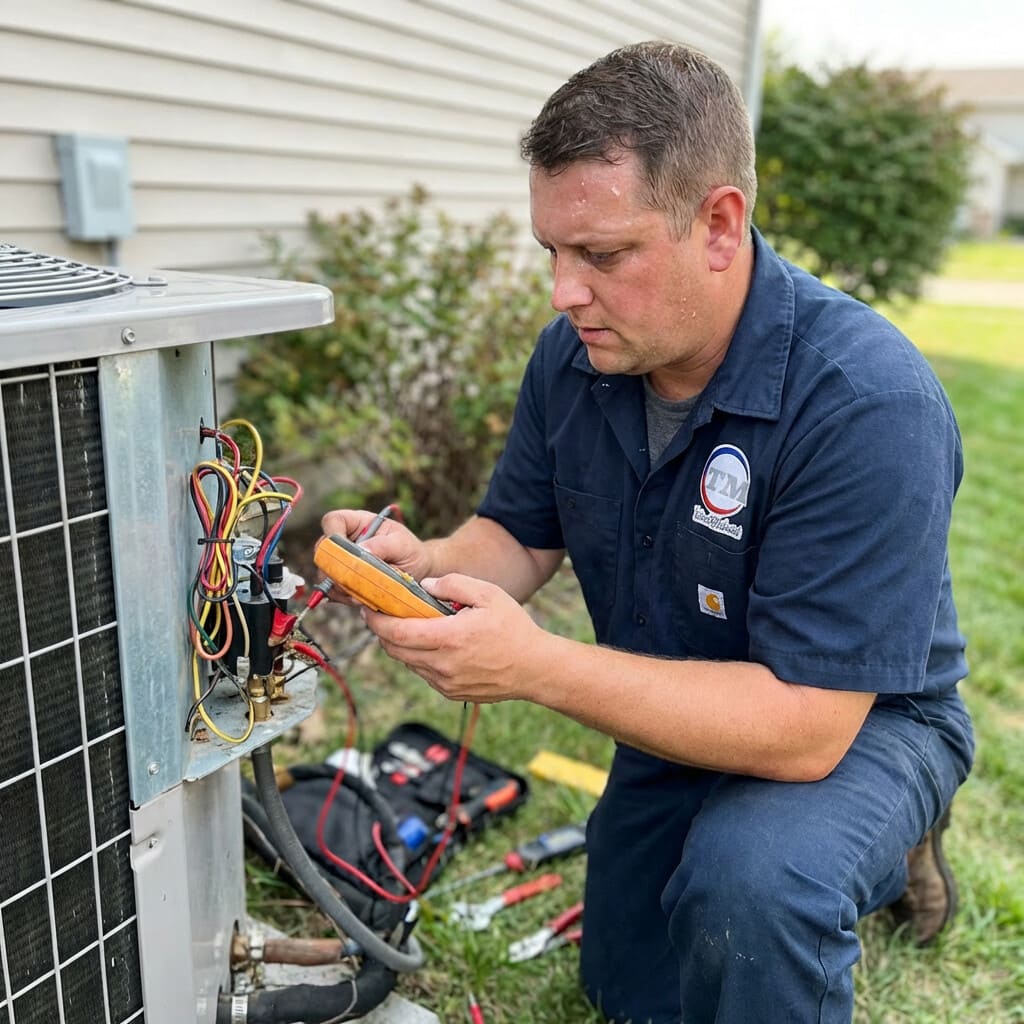
Technicians carry specialized tools, training, and certifications that map to the tasks homeowners should not perform. They recover refrigerant to comply with environmental regulations, perform leak detection with electronic tools, and handle high-voltage components safely. They test system pressures with gauges, evaluate superheat and subcooling to diagnose refrigerant charge, and measure airflow and static pressure to reveal duct restrictions. The contractor will also offer diagnostics around the compressor, reversing valve for heat pumps, and control boards that connect the indoor and outdoor units.
A licensed HVAC company advantage extends beyond repairs. During service calls they can show you long-term efficiency improvements, help with selecting an optimized replacement for Ac installation in Tucson, and advise on zoning, duct sealing, and proper system sizing to avoid future complaints.
Choosing the right contractor in Tucson
Not all HVAC contractors are equal. In my experience, the best technicians combine prompt communication, clear pricing, and local experience with Tucson climate and codes. Look for contractors with positive local reviews and transparent quotes that list parts, labor, and warranty details. If a company suggests replacing the unit without testing or gives a vague “need to replace” quote, ask for diagnostics and second opinions. A quality contractor will diagnose, explain options, and provide a written estimate.
Licensing, insurance, and certifications matter. Confirm the company carries Arizona state mechanical or HVAC contractor licensing as required, and verify general liability insurance. Technicians certified by organizations like NATE signal competency, but practical experience and local references are equally important. If you search online, phrases like HVAC company near me or HVAC Service Near Me will lead to options, but narrow that list by checking recent local reviews and whether the company lists transparent pricing tiers.
Price vs value: an honest trade-off
Lower bids can be tempting, but cheap repairs with inferior parts or shallow diagnostics often cost more later. I once responded to a call where a homeowner paid a low-priced contractor who replaced a control board without testing the capacitor and refrigerant charge. Two months later the compressor seized due to low refrigerant, and the replacement cost far exceeded a single correct diagnosis. Good contractors explain trade-offs: matching the original form, fit, and function versus premium parts with longer warranties, or repair now and replace later versus going straight to a high-efficiency replacement.
Ask the contractor about warranty coverage on parts and labor, whether they use manufacturer-certified parts for replacements, and if they offer maintenance plans. Preventive maintenance saves roughly 10 to 20 percent in repair costs over time in my experience, and it reduces emergency calls during heat waves.
Plunkett Home Services and local familiarity
Local contractors who operate in Tucson year-round understand seasonal load patterns, common installation pitfalls, and irrigation-related condenser damage. If you are considering a provider, check whether they offer emergency AC repair near me options during summer peaks, what their standard diagnostic fee covers, and whether they belong to local trade associations. Companies like Plunkett Home Services advertise local presence and a portfolio of HVAC repair and installation work. Ask any candidate for examples of recent Tucson installations and references from nearby neighborhoods.
When replacement makes sense
There are clear thresholds where replacement is the right decision. If the compressor has failed and the outdoor unit is over 10 years old, replacement is often more economical than a compressor swap. If the system uses R-22 refrigerant, continuing repairs will grow more expensive because R-22 is phased out and costly to source. If your home has changed — open floor plans, new additions, or significant spacer changes — the original system may be undersized today, and an Ac installation in Tucson tailored to the present load will deliver better comfort and efficiency.
A contractor should present a load calculation, not just base sizing on the old unit's tonnage. Proper sizing accounts for insulation, window orientation, and footprint changes. A right-sized, high-efficiency system can lower energy use by 20 percent or more compared with a failing system, depending on age and condition.
Preparing for a service call
When you schedule an HVAC contractor, make the most of the visit by documenting symptoms, times of day when issues occur, and any recent changes such as new thermostats, ductwork work, or electrical modifications. Clear the access path to the air handler and condenser. If pets are present, secure them. Note any warranty paperwork and ownership documentation for installed equipment. If you have an older unit, knowing the model and serial number from a sticker on the condenser will speed diagnostics.
Questions to ask the technician
Ask the technician what diagnostics they will perform, whether the quoted price includes refrigerant cost if a recharge is needed, and what warranty covers parts and labor. Request an estimate for both repair and replacement options, with pros and cons for each. A reliable contractor will also offer simple efficiency tips you can implement right away, like improving attic insulation or sealing duct leaks.
Final judgment: when to pick up the phone
Call an HVAC contractor if your DIY checks do not restore cooling, if you detect electrical or refrigerant leaks, or if noise or smells suggest mechanical failure. Move faster when the system is old, when sensitive occupants are at risk, or when utility bills spike without explanation. In Tucson summers, early action avoids the worst waits and emergency premiums.
If you want a local starting point, search for HVAC repair in Tucson or HVAC company near me and prioritize contractors who provide clear diagnostics, are upfront about warranty and pricing, and who demonstrate Tucson service experience. For many homeowners, working with a reputable, licensed provider like Plunkett Home Services or a similar local firm gives the fastest route back to reliable cooling.
Tucson heat is inevitable, but suffering through it is optional. A timely service call preserves comfort, protects your equipment, and prevents small problems from becoming expensive failures.
Plunkett Home Services
3144 E Fort Lowell Rd, Tucson, AZ 85716, United States
+1 (520) 808-2743
[email protected]
https://callplunkett.com/